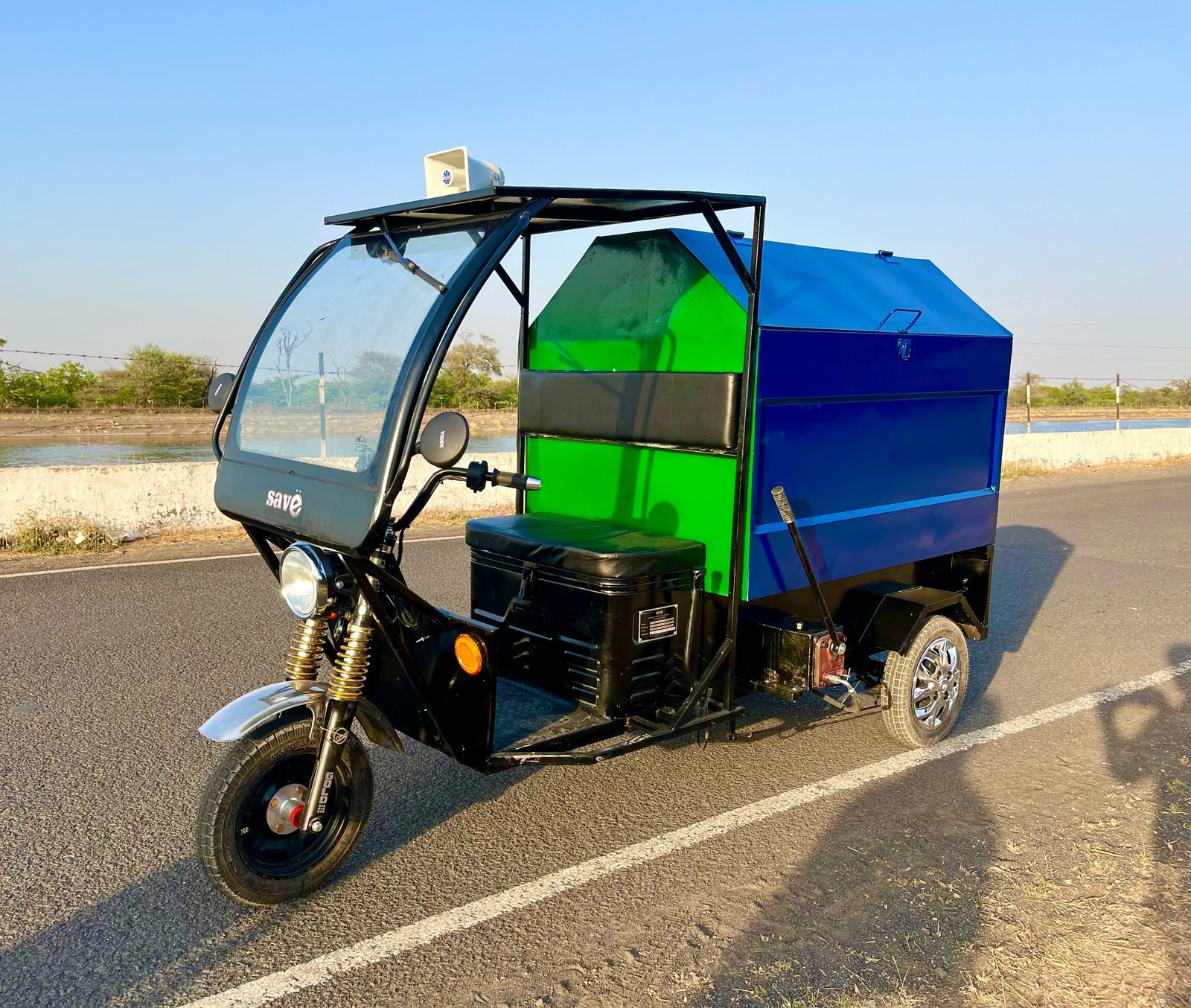
Transforming Door-to-Door Urban Sanitation
Municipal solid waste management is one of the most critical daily civic functions in urban India. However, traditional diesel-powered garbage compactors and small diesel trucks face severe operational limitations in high-density Indian neighborhoods:
1. Narrow Alley Navigation: Dense historical gullies and residential lanes cannot accommodate full-sized diesel trucks, resulting in inefficient manual carting.
2. Idling Emissions in Morning Hours: Diesel vehicles idling during door-to-door stop-start collection emit heavy particulate matter (PM2.5) and noxious fumes right outside residential doorsteps during morning peak walking hours.
3. Exorbitant Operating Costs: Frequent stop-and-go driving rapidly degrades clutches, burns excessive diesel, and drives up municipal maintenance budgets.
The Purpose-Built Electric Advantage
Purpose-built electric tippers like the SAVY Dump Truck solve these structural bottlenecks:
– Zero Noise and Zero Morning Fumes: Electric motors operate silently, allowing collection teams to complete rounds early in the morning without disturbing sleeping citizens.
– Dual Wet and Dry Compartments: Built-in segregation partitions help municipalities enforce source-level waste separation in alignment with Swachh Bharat directives.
– Electro-Hydraulic Tipping: Direct bin unloading reduces sanitation workers’ physical strain and accelerates turn-around times at municipal transfer stations.
– Over 75% Cost Reduction: Electricity costs per kilometer are a fraction of diesel, saving lakhs annually for local bodies and Gram Panchayats.
Conclusion
As Indian cities transition towards zero-emission public services, electrifying the municipal sanitation fleet provides immediate, measurable health, environmental, and economic dividends.