Author: dev.fistbump
-
Driving a Cleaner Future: The One Vehicle, One Tree Initiative
Holistic Sustainability in Manufacturing
True environmental stewardship extends beyond replacing tailpipe exhaust with battery power. At SAVY Greentech, our manufacturing philosophy is rooted in circular economy principles, eco-conscious material selection, and measurable environmental contributions.
The One Vehicle, One Tree Commitment
For every electric vehicle manufactured and delivered to our clients across India, SAVY Greentech commits to planting and nurturing a native tree sapling in partnership with local community restoration drives.
– Direct Ecological Impact: Reforestation with indigenous species enhances biodiversity, supports groundwater recharge, and creates local carbon sinks.
– Community Engagement: Working with local green trusts and schools to nurture planted trees into mature green canopies.
– Transparent Accountability: Tracking tree count in alignment with verified customer delivery figures.
Join us on the journey toward a zero-emission, greener tomorrow.
-

Purpose-Built Custom EVs vs. Off-The-Shelf Fleets: Why Fit Matters
The Limitations of Generic Off-The-Shelf Fleets
Every enterprise operation has distinct physical constraints: – An FMCG spice manufacturer transporting 900kg crates requires reinforced axle hubs that standard passenger auto-rickshaws cannot offer. – A resort in an eco-sensitive coastal zone needs marine-grade corrosion resistance and luxury upholstery. – A mobile street food entrepreneur needs integrated food-grade stainless counters and auxiliary appliance inverters.
Off-the-shelf mass-market vehicles force businesses to compromise on payload, dimensions, or equipment integration.
The SAVY In-House Engineering Advantage
SAVY Greentech’s end-to-end design-to-assembly manufacturing model allows bespoke vehicle engineering: – Chassis Customization: Lengthening, widening, or reinforcing ladder frames for specific payload requirements. – Custom Powertrains: Tuning motor torque curves for steep resort hills or heavy factory ramps. – Special Purpose Superstructures: Building mobile ATMs, milk distribution racks, tipping dump bins, or VIP classic retrofits.
By building the vehicle around the operation rather than forcing the operation to fit the vehicle, businesses maximize daily operational productivity.
-
Commercial EV Adoption: Total Cost of Ownership (TCO) Analysis
Moving Beyond Upfront Sticker Price
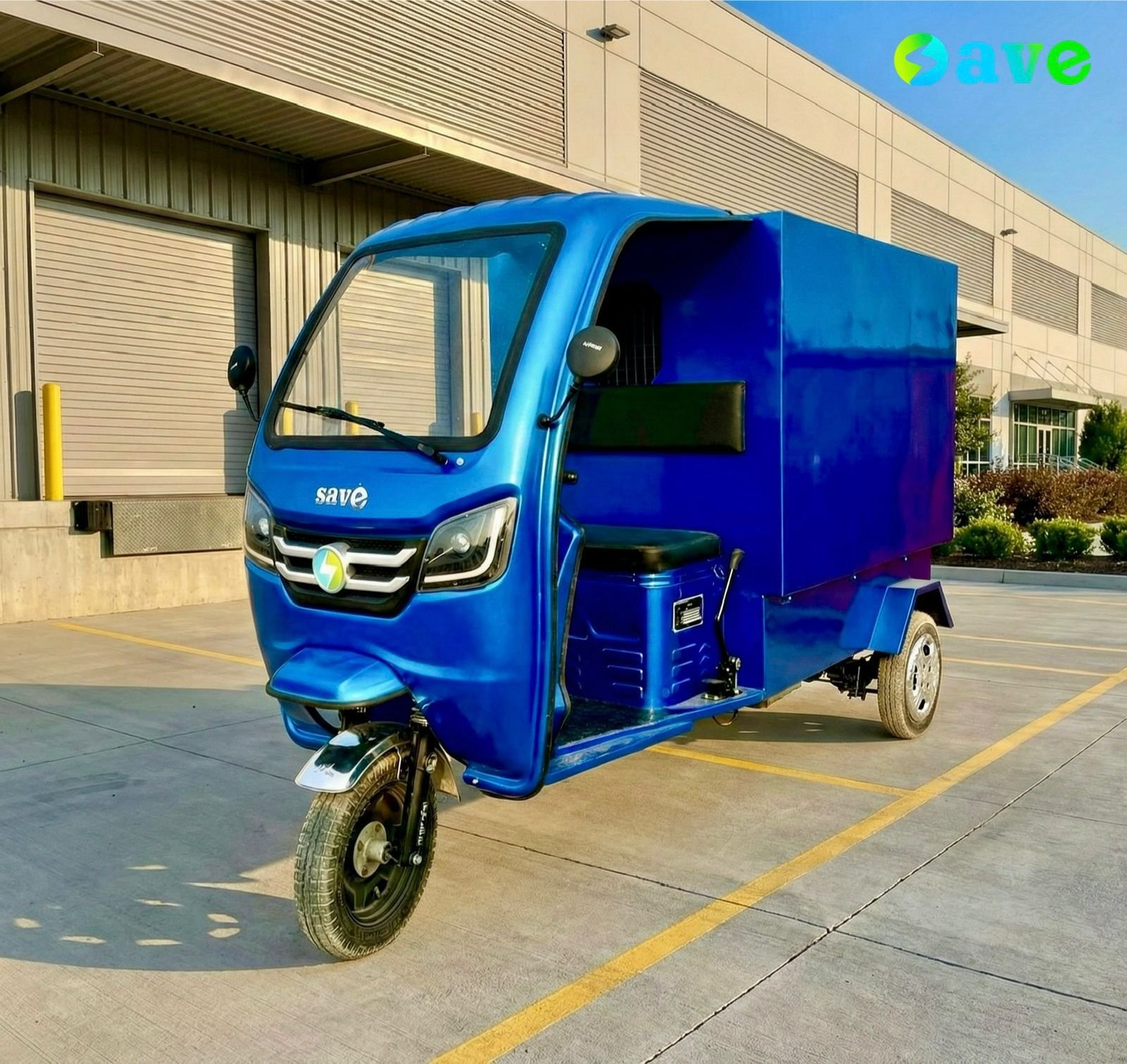
When evaluating commercial fleet investments, forward-thinking logistics directors look at Total Cost of Ownership (TCO) over a 3 to 5-year operating horizon rather than just the initial purchase price.
TCO Comparison: Diesel Three-Wheeler vs. SAVY Electruck
1. Energy Cost per Kilometer:
– Diesel 3-Wheeler: Approx. ₹4.50 – ₹6.00 per km (based on ₹90/L diesel and real-world city mileage).
– SAVY Electruck EV: Approx. ₹0.80 – ₹1.20 per km (based on commercial electricity tariffs).
– Annual Savings (at 80 km/day): Over ₹1,10,000 in fuel savings alone.
2. Maintenance & Servicing:
– Electric drivetrains have fewer than 20 moving parts compared to over 2,000 in internal combustion engines. No engine oil changes, spark plugs, clutch plates, or exhaust filters.
– Maintenance Savings: Over 60% reduction in annual servicing costs.
3. Asset Longevity & Resale:
– Heavy-duty chassis engineering and robust lithium battery management systems deliver predictable, reliable performance over years of rigorous service.
Summary
For logistics operators, FMCG distributors, and municipal fleets, switching to purpose-built EVs is no longer just an environmental goal—it is a compelling financial necessity.
-

How Campuses Are Switching to Electric Golf Carts
The Campus Transit Challenge
Educational institutions, hospital medical colleges, gated industrial townships, and luxury resorts share a common spatial trait: large multi-acre campuses with extensive internal pedestrian traffic.
Relying on conventional cars or motorbikes inside these zones creates noise pollution, safety risks for pedestrians, and unnecessary carbon emissions.
Why Institutional Campuses Choose SAVY Golf Carts
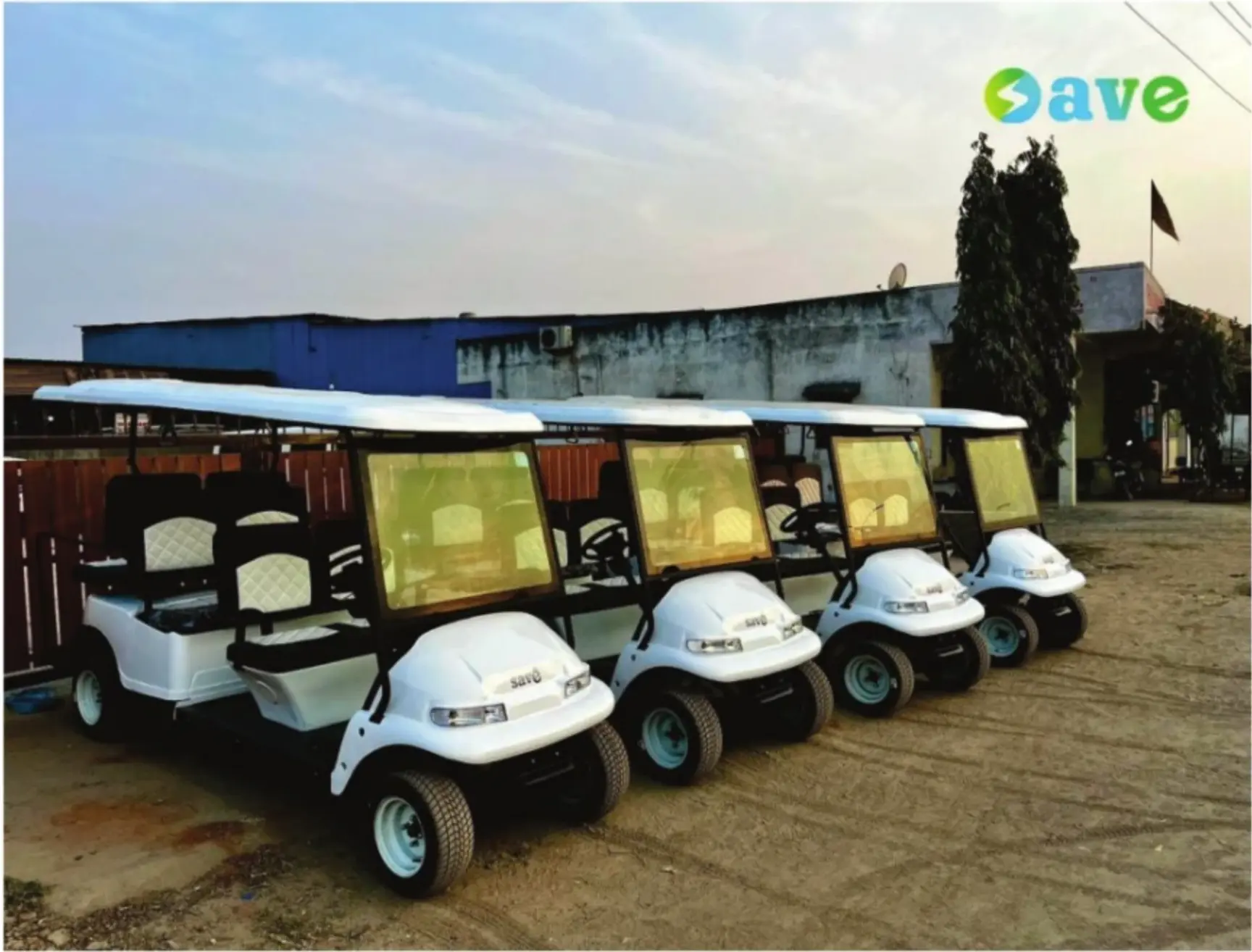
– Pedestrian Safety & Regulated Speed: Campus carts are capped at safe internal operating speeds (20–25 km/h), minimizing collision risks along student walkways and hospital corridors.
– Silent & Non-Disruptive: Whether moving between lecture halls or transporting hospital patients, electric powertrains ensure zero acoustic distraction.
– High Seating Flexibility: Available in 2, 4, 6, 8, and custom 12-seater configurations to handle student shuttles, campus security tours, and VIP visitor delegations.
– Reliable Turnkey Charging: Standard plug-and-play charging stations can be installed at security gates, maintenance sheds, or central parking bays.
SAVY has partnered with prestigious institutions such as IIT Gandhinagar, University of Pune, and Civil Hospital Ahmedabad to provide durable, all-weather campus transportation solutions.
-
Benefits of Electric Garbage Collection Vehicles for Smart Cities
Transforming Door-to-Door Urban Sanitation
Municipal solid waste management is one of the most critical daily civic functions in urban India. However, traditional diesel-powered garbage compactors and small diesel trucks face severe operational limitations in high-density Indian neighborhoods:
1. Narrow Alley Navigation: Dense historical gullies and residential lanes cannot accommodate full-sized diesel trucks, resulting in inefficient manual carting.
2. Idling Emissions in Morning Hours: Diesel vehicles idling during door-to-door stop-start collection emit heavy particulate matter (PM2.5) and noxious fumes right outside residential doorsteps during morning peak walking hours.
3. Exorbitant Operating Costs: Frequent stop-and-go driving rapidly degrades clutches, burns excessive diesel, and drives up municipal maintenance budgets.
The Purpose-Built Electric Advantage
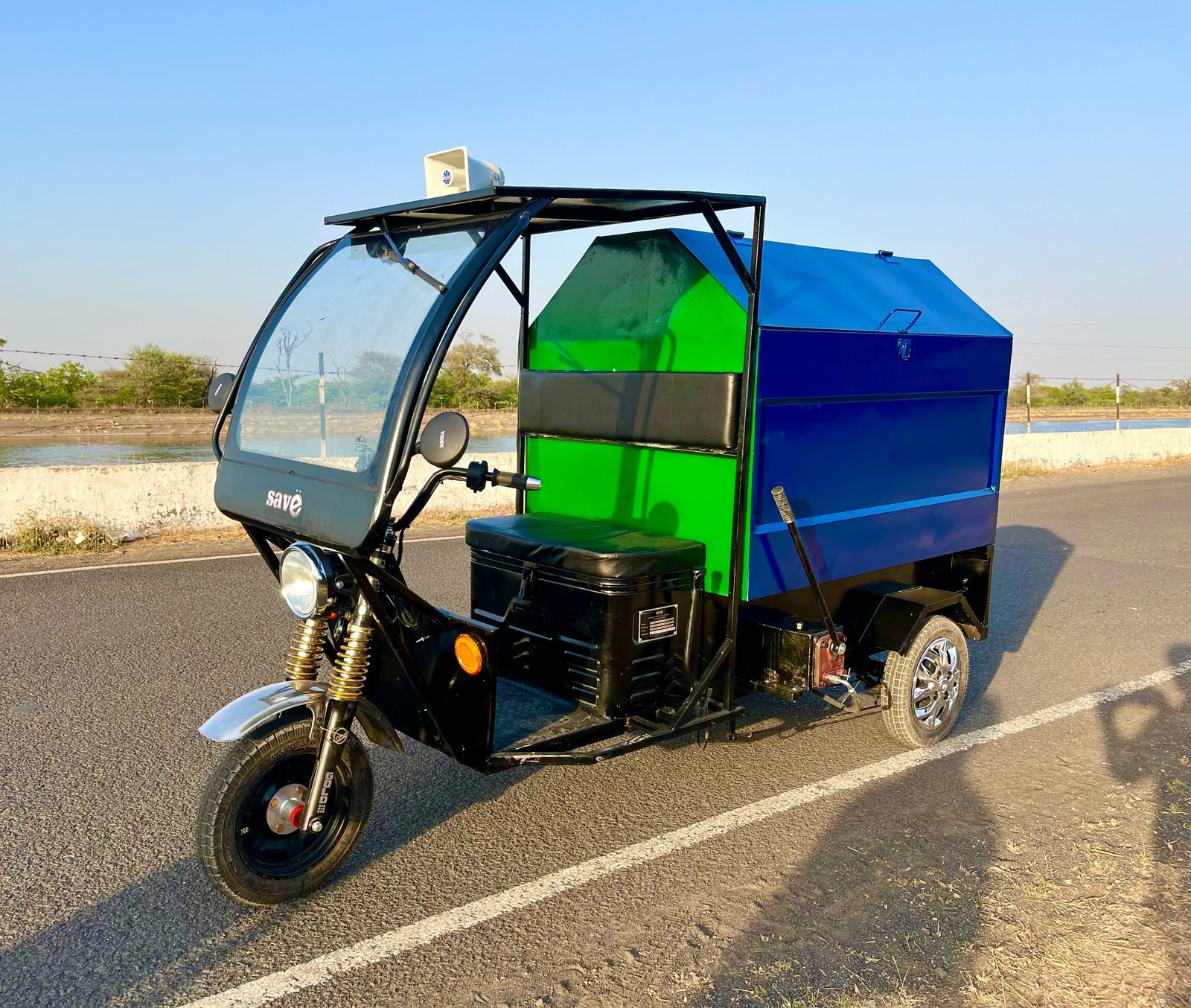
Purpose-built electric tippers like the SAVY Dump Truck solve these structural bottlenecks:
– Zero Noise and Zero Morning Fumes: Electric motors operate silently, allowing collection teams to complete rounds early in the morning without disturbing sleeping citizens.
– Dual Wet and Dry Compartments: Built-in segregation partitions help municipalities enforce source-level waste separation in alignment with Swachh Bharat directives.
– Electro-Hydraulic Tipping: Direct bin unloading reduces sanitation workers’ physical strain and accelerates turn-around times at municipal transfer stations.
– Over 75% Cost Reduction: Electricity costs per kilometer are a fraction of diesel, saving lakhs annually for local bodies and Gram Panchayats.
Conclusion
As Indian cities transition towards zero-emission public services, electrifying the municipal sanitation fleet provides immediate, measurable health, environmental, and economic dividends.